The best Fracture Repair products in 2026 are not necessarily the newest or most heavily promoted. The right choice depends on the break, bone quality, surgical approach, and the patient’s needs. A plate may suit a fracture near a joint, while an intramedullary nail can stabilize certain long-bone breaks from within. External fixation and bone graft substitutes may have roles in selected cases. No device fits every fracture.
A useful principle, offered here as a paraphrase rather than a verbatim quotation, reflects the work of orthopedic trauma specialist Dr. David L. Helfet: “Stable fixation should support healing while respecting the biology of the fracture.” That distinction matters. Hardware holds bone in position; it does not guarantee healing. Surgeons also weigh fit, strength, ease of placement, imaging visibility, and the risks of complications. A small mismatch between implant and anatomy can matter more than a polished product brochure suggests.
This guide compares major product types and the features clinicians may consider in 2026. It will examine evidence, practical trade-offs, and questions to discuss with a qualified orthopedic professional. Product availability and clinical guidance can change, so rankings should be treated cautiously. Some comparisons are imperfect: studies may examine different fractures, patients, or outcomes. That is worth remembering. The most useful choice is an informed clinical decision, not a universal “best” label.
Fracture repair products help keep broken bone ends aligned while the body builds new bone. A removable splint can limit movement and leave room for swelling. A cast surrounds the injured area more fully, like a firm shell around a forearm. Both reduce unwanted motion, but neither repairs every fracture on its own. That distinction matters.
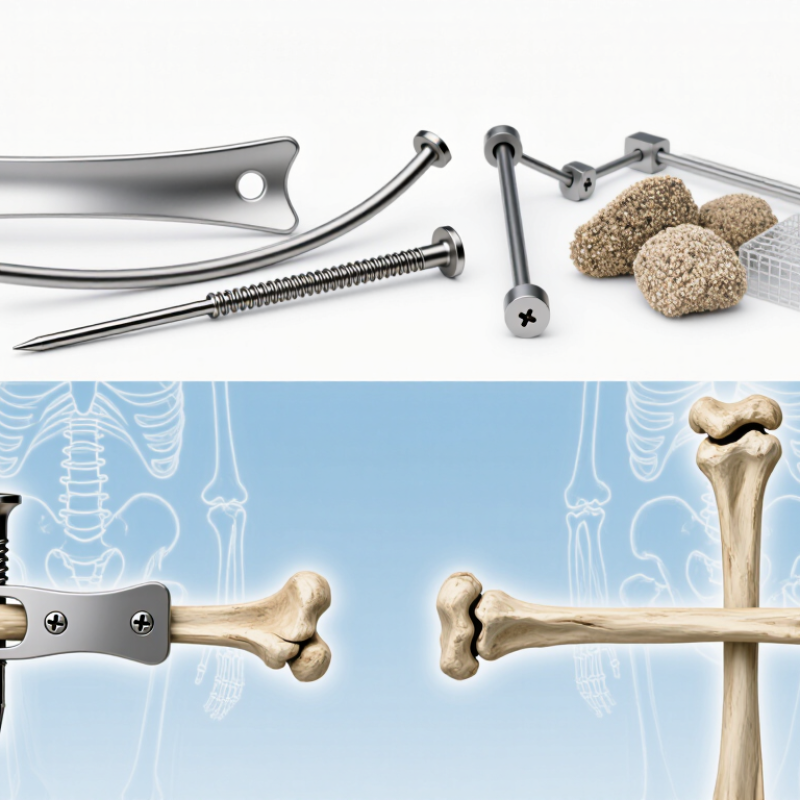
For fractures needing more stability, surgeons may use metal plates, screws, or rods to hold bone pieces in position. An external fixator uses pins connected to a frame outside the body, which can be useful when surrounding tissue needs attention. Bone graft material may be considered when a fracture has a gap or healing is impaired; it provides a framework that can support new bone growth. These products work differently, and none guarantees a quick recovery.
The choice depends on the fracture’s location and pattern, the patient’s health, and how well the bone stays aligned. Follow-up images help clinicians check progress and adjust care. Some healing is slow. That can be frustrating. Products also have limits: a device may stabilize bone, but pain, stiffness, infection risk, or delayed healing still need professional assessment. The categories sound neat; real fractures are not always so tidy.
In 2026, fracture repair products range from simple immobilizers to surgical implants. Casts and splints limit movement while bone heals. A padded splint can accommodate early swelling, while a rigid cast offers firmer support later. Removable braces allow adjustments and may help with certain stable injuries. They are not suitable for every fracture.
For fractures that need surgery, internal fixation devices include metal plates, screws, pins, and intramedullary nails. Surgeons select their shape and placement based on the bone, fracture pattern, and patient’s condition. Some complex injuries require external fixation: pins connect the bone to a frame outside the skin. It can provide stability while leaving access to injured soft tissue. The frame may look cumbersome, and that practical burden matters too.
Bone grafts and bone-graft substitutes may be used when bone loss or slow healing creates a need for added support. Options include material taken from the patient or processed substitutes; suitability varies. These products do not replace sound fracture assessment or follow-up imaging. The “best” choice depends on the injury, healing risks, and daily needs, so patients should discuss expected benefits and trade-offs with their orthopedic team. Pain, swelling, or fit can change over time. That detail is easy to overlook.
Main types of resorbable fracture-fixation materials: typical reported time to resorption or degradation
PGA, PLGA, PLLA, and magnesium-alloy fixation devices are resorbable options; the ranges shown are approximate and vary by device, formulation, and patient. Titanium and stainless-steel plates, screws, and nails are also widely used, but they are not designed to resorb. The most suitable option depends on the fracture and clinical assessment.
“What counts as best depends on the fracture. A small, stable wrist fracture and a complex tibial break need different support. Compare each product by its intended use: maintaining alignment, filling a bone defect, or helping address delayed healing. In a 2019 Global Burden of Disease analysis, researchers estimated 178 million new fractures worldwide. That scale matters. It also makes broad product rankings tempting—and often misleading.
For fixation devices, examine evidence on alignment, healing time, reoperation, and complications. For graft materials or bone-healing adjuncts, check whether trials measured union rates and meaningful function, not just changes on imaging. Look for randomized trials or systematic reviews, and note how closely their patients match the intended user. The AAOS clinical practice guidelines offer condition-specific recommendations, but they do not establish one product as best for every fracture. Read the fine print. Follow-up periods, fracture severity, and outcome definitions can vary. A result from a controlled study may not translate neatly to a patient with poor bone quality or multiple injuries. That gap deserves attention. Evidence can be patchy, and clinicians should discuss uncertainty alongside likely benefits, risks, and practical details such as weight-bearing restrictions.
A fracture repair product should match the injury, not just feel convenient. Clinicians consider the bone involved, fracture stability, swelling, skin condition, and imaging results. A removable splint may suit some injuries or early swelling, while a cast may provide firmer support. Braces can help during specific recovery stages. The right option depends on professional assessment.
Fit matters. A device that rubs the heel or pinches near the wrist can cause skin problems. Ask how to keep it clean and dry, whether it can be adjusted, and when it should be checked. Comfort can be misleading. A snug fit is not always a safe fit, especially as swelling changes.
Think about daily use, too. Can the person move safely, sleep comfortably, and follow care instructions? These details are easy to overlook. Some are. Internal fixation devices and external frames require specialist care; they are not products to choose independently. Seek prompt medical advice if pain sharply worsens, fingers or toes become numb or discolored, or the device feels increasingly tight.
Fracture repair products range from casts and braces to internal fixation devices and bone graft materials. The right option depends on the break’s location, stability, skin condition, and a patient’s health. A wrist fracture in a healthy adult may need very different care from a poorly healing leg fracture. No device is risk-free.
Each option has limits. A brace may not control an unstable fracture, while surgery can bring infection, blood loss, nerve irritation, or hardware discomfort. Grafts and bone substitutes also differ in evidence and suitability; they do not guarantee faster healing. Smoking, diabetes, poor nutrition, and some medications can affect recovery, even when treatment is well chosen. Healing can stall.
Clinicians weigh examination findings and imaging against daily needs, such as walking or returning to work. They should explain expected benefits, alternatives, likely restrictions, and warning signs, then review progress with follow-up imaging when appropriate. A product that worked for one person may not suit another. It is easy to focus on the implant and overlook rehabilitation, but stiffness and weakness can persist after the fracture itself improves. Pain that suddenly worsens, increasing redness, fever, or new numbness deserves prompt medical assessment.
They help keep broken bone ends aligned while new bone forms. A cast feels like a firm shell. These products support healing but do not guarantee it.
Splints limit movement and leave room for early swelling. Casts surround the area more firmly. Removable braces allow adjustments, but they do not suit every fracture.
Surgeons may use internal fixation devices when a fracture needs added stability. The choice depends on the bone’s location, fracture pattern, and patient’s health.
Pins connect the bone to a frame outside the skin. It can stabilize a fracture while leaving access to injured soft tissue. The frame can feel cumbersome.
It may support healing when bone is missing or healing is impaired. Graft options vary, and none promises faster recovery.
There is no single best option. Clinicians consider alignment, skin condition, health, and daily needs, such as walking or working. Similar injuries can need different care.
Smoking, diabetes, poor nutrition, and some medicines may affect recovery. Stiffness and weakness can linger. That part is easy to underestimate.
Seek professional assessment for suddenly worsening pain, increasing redness, fever, or new numbness. Follow-up images may help clinicians check healing and adjust care.
Fracture Repair products include devices and materials designed to support a broken bone as it heals. Options may include casts, braces, fixation hardware, bone graft materials, and selected stimulation devices. They work in different ways: some keep the bone stable, while others help fill a defect or may support the body’s healing process. The most suitable option depends on the fracture’s location, severity, stability, and the person’s overall health.
When comparing products, consider their intended use, clinical evidence, expected benefits, risks, comfort, and care requirements—not just general claims of effectiveness. A product that is appropriate for one fracture may not suit another, and some options are used only alongside standard medical treatment. Discuss choices with a qualified clinician, who can assess imaging and individual needs. Fracture Repair products have limitations and may involve complications, so they should not replace professional diagnosis, treatment, or follow-up.

Deon Medical