Joint Replacement is no longer a niche procedure. It is a major part of modern orthopedic care. For patients, the decision is concrete: a painful hip, a stiff knee, and the hope of walking more comfortably. For manufacturers, the challenge is equally practical. Implants must balance durability, fit, surgical usability, and reliable evidence.
The American Joint Replacement Registry’s 2024 Annual Report documented more than 3.1 million hip and knee procedures recorded cumulatively across participating U.S. institutions through 2023. That is a substantial dataset, but it does not represent every operation worldwide. Registry findings can help compare implant use and outcomes; they cannot, by themselves, prove that one brand is best for every patient. Small distinctions matter.
Sir John Charnley, a pioneer of modern hip replacement, is often associated with the phrase “the operation of the century.” His work helped shape the field. Yet today’s choices extend well beyond one inventor or implant design. This overview examines ten major manufacturers and the technologies behind their portfolios, while recognizing that market presence is not the same as clinical superiority. Rankings also depend on the criteria used—revenue, geographic reach, product range, or published outcomes. That judgment deserves scrutiny. A manufacturer’s name may be familiar, but the right implant still depends on the patient, surgeon, and evidence.
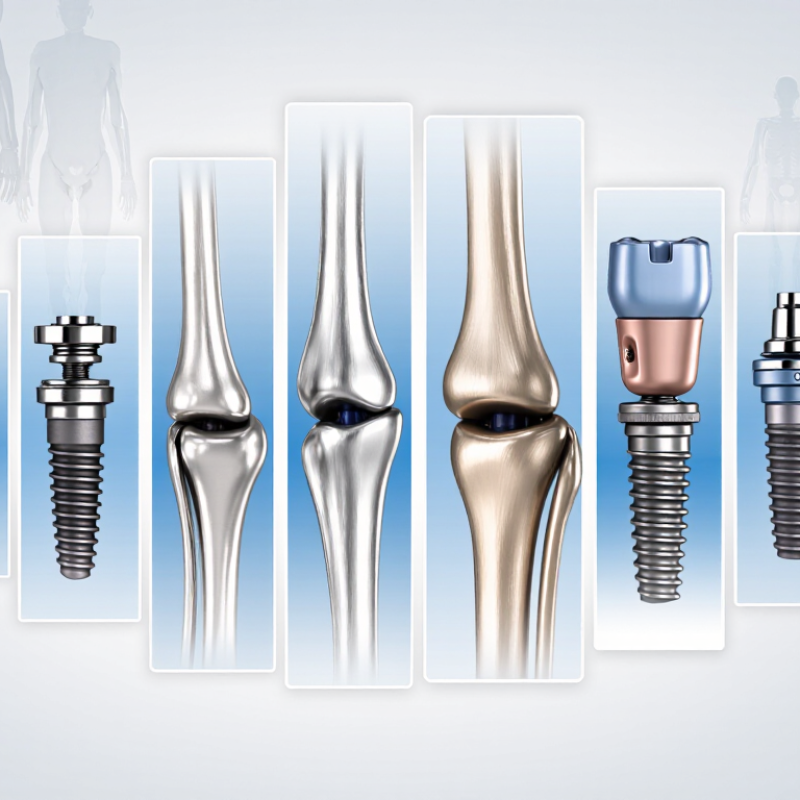
Joint replacement manufacturers make more than finished implants. Hip product families usually include a femoral stem, a head, an acetabular shell, and a low-friction liner. Knee systems pair a metal femoral component with a tibial baseplate and polymer insert; some include a patellar button. Manufacturers also produce trial parts, surgical instruments, and fixation options, including porous surfaces designed to support bone attachment.
Materials vary: titanium alloys, cobalt-chromium alloys, ceramics, and ultra-high-molecular-weight polyethylene each serve distinct roles. Small parts matter.
Product lines may also cover shoulder, elbow, and ankle replacements, with different sizes and fixation styles. Cemented designs use bone cement; cementless designs rely on initial mechanical fit and later bone ingrowth.
The World Health Organization estimated that 528 million people lived with osteoarthritis in 2019, including 365 million with knee osteoarthritis (WHO, 2023). That burden helps explain clinical need, but does not predict who needs surgery. OECD’s Health at a Glance 2023 documents wide differences in hip and knee replacement rates across countries, reflecting access and clinical practice as well as need.
A catalog can make options look interchangeable. They are not. Surgeons weigh anatomy, bone quality, activity, and revision risk; even then, no material or design suits every patient. That limitation deserves more attention in product comparisons.
Top 10 Joint Replacement Manufacturers Worldwide? How the Top Manufacturers Are Identified and Compared
A credible comparison looks beyond sales rankings. Evaluators examine implant survival, revision rates, clinical evidence, manufacturing consistency, and surgeon support. Registry data can reveal how often implants require replacement in real-world practice. The Australian Orthopaedic Association National Joint Replacement Registry’s 2024 annual report covers more than 1.8 million procedures, offering a substantial basis for comparing outcomes. Yet raw rankings can mislead. Patient age, diagnosis, surgical technique, and follow-up time all affect results.
A sound assessment compares similar implant types and patient groups, then checks whether findings appear across independent datasets. The UK National Joint Registry’s annual reports also track implant performance and revision risk. Look for clearly defined time periods, adequate case numbers, and transparent methods. A low revision rate is useful, but it does not prove one manufacturer is best for every patient. Long-term evidence matters. So does consistency across hospitals.
Tips: Check registry reports, not just brochures. Ask how outcomes were measured and whether comparisons account for patient differences. Some data remain imperfect; that deserves scrutiny.
Profiles of ten leading joint replacement manufacturers are most useful when they compare clinical evidence, implant design, and surgical support—not slogans. The AJRR 2023 Annual Report describes a U.S. registry dataset exceeding 3.1 million hip and knee procedures. The UK National Joint Registry’s 20th Annual Report records more than three million procedures since 2003. These figures show the scale of joint replacement, but they do not prove one manufacturer’s products are superior.
A practical profile should note whether a company offers hip, knee, or revision systems; cemented and cementless options; and compatible planning or navigation tools. It should also examine published survivorship, documented complications, surgeon training, and product availability across regions. Scale matters. The ten companies may differ substantially: some offer broad portfolios, while others focus on specialized implants or digital surgery support. Compare like with like, since patient age, diagnosis, implant fixation, and follow-up length can change reported outcomes. A registry result is useful, but not a guarantee for an individual patient. One limitation remains: public data do not always permit fair, direct comparisons between manufacturers.
The profiles below are presented without company or brand names. The order is illustrative, not a verified ranking by revenue or market share. Founding years and portfolio descriptions reflect publicly reported company histories and product areas.
| Rank | Anonymous Profile | Home Country | Founding Year | Joint Replacement Portfolio | Profile Overview |
|---|---|---|---|---|---|
| 1 | Manufacturer A | United States | 1941 | Hip, knee, and shoulder | A diversified medical technology manufacturer with a broad orthopedic implant portfolio and products for several major joint procedures. |
| 2 | Manufacturer B | United States | 1927 | Hip, knee, and shoulder | An established orthopedic-device manufacturer offering implants and related technologies for primary and revision joint procedures. |
| 3 | Manufacturer C | United States | 1895 | Hip, knee, and shoulder | A long-standing orthopedic business with joint reconstruction products alongside other surgical and musculoskeletal technologies. |
| 4 | Manufacturer D | United Kingdom | 1856 | Hip and knee | A global medical technology manufacturer whose orthopedic activities include joint implants, surgical instruments, and related technologies. |
| 5 | Manufacturer E | Germany | 1839 | Hip and knee | A diversified healthcare group with a surgical-instrument and orthopedic implant business serving joint replacement procedures. |
| 6 | Manufacturer F | United States | 1985 | Hip, knee, shoulder, and ankle | An orthopedic-focused manufacturer with products spanning several joint areas, including systems used in reconstruction and revision surgery. |
| 7 | Manufacturer G | China | 1998 | Hip and knee | A China-based medical technology group with an orthopedic business that develops and supplies joint replacement products. |
| 8 | Manufacturer H | United Kingdom | 1977 | Hip and knee | An orthopedic specialist with a focus on joint reconstruction and technologies intended to support surgical planning and implant procedures. |
| 9 | Manufacturer I | Switzerland | 1999 | Hip, knee, and shoulder | An orthopedic manufacturer whose portfolio includes joint replacement systems as well as products for other areas of orthopedic surgery. |
| 10 | Manufacturer J | Japan | 1959 | Hip and knee | A diversified technology manufacturer with a medical-device business that includes orthopedic implants for joint reconstruction. |
Joint implants pair strong metals with low-friction bearing surfaces. Femoral stems and cups often use titanium alloys or cobalt-chromium alloys. Titanium supports bone integration when its surface is porous or specially textured. Cobalt-chromium offers a hard, wear-resistant surface. Ceramic heads and highly cross-linked polyethylene liners can reduce friction and particle wear. Still, no material combination is best for every patient.
Fixation technology matters, too. Some implants use bone cement, while porous coatings encourage bone to grow onto uncemented components. Additive manufacturing can create controlled pores, but long-term performance depends on design, surgical technique, and patient factors.
The American Joint Replacement Registry’s 2024 Annual Report recorded more than 3.4 million hip and knee procedures from 1,468 hospitals. Such registry data help track implant use and outcomes at scale; they do not prove one material is superior for every case. The details matter.
Tips: Ask which bearing pair and fixation method suit your bone quality and activity level. Review expected benefits and risks with your surgeon. Small differences can matter.
Global Markets and Factors Shaping Manufacturer Performance
Joint replacement manufacturers operate in markets with very different needs. Aging populations and rising expectations for mobility can increase demand, but demand alone does not determine performance. Hospitals also consider clinical evidence, product reliability, surgeon training, and the availability of implants in suitable sizes. Small details matter. A well-stocked operating room can prevent delays, while a missing component may disrupt a planned procedure.
Market conditions shape access and growth. Reimbursement policies affect which procedures hospitals can afford, and local infrastructure influences how consistently implants can be supplied. In some regions, surgeons have access to advanced imaging and specialized training; elsewhere, cost and uneven distribution remain practical barriers. Manufacturers must also adapt designs and support services to different patient needs without overstating what a device can achieve. That is not simple. Comparing companies across countries can be misleading, since reporting standards and patient populations differ. Even strong sales figures do not, by themselves, show long-term patient outcomes. A careful assessment looks at published clinical data, supply continuity, training, and follow-up care together—and admits that no single measure tells the whole story.
A hip system usually includes a femoral stem, a head, an acetabular shell, and a liner. Small parts matter.
A knee system pairs a metal femoral component with a tibial baseplate and polymer insert. Some designs also include a patellar button.
Common materials include titanium alloys, cobalt-chromium alloys, ceramics, and ultra-high-molecular-weight polyethylene. Each has a different role.
Cemented designs use bone cement. Cementless designs depend on an initial mechanical fit and later bone ingrowth. Neither suits everyone.
Compare similar implant types and patient groups using registry data, clinical evidence, and clear follow-up periods. A ranking alone is not enough.
Patient age, diagnosis, surgical technique, and follow-up time can affect results. A low rate does not prove one design is best for every patient.
Look for case numbers, defined time periods, transparent methods, and comparisons adjusted for patient differences. Some data remain imperfect.
Reimbursement, hospital resources, implant availability, surgeon training, and supply continuity all matter. A missing component can delay a planned procedure.
No. Sales figures do not establish implant survival or patient outcomes. That sounds tidy, but it is not enough.
They consider anatomy, bone quality, activity, and revision risk. Even careful comparisons cannot identify one design for everyone.
This overview explores the worldwide Joint Replacement industry, beginning with the implants and related components manufacturers produce for procedures involving major joints. It explains how leading manufacturers can be identified and compared using factors such as product range, research and development, manufacturing capabilities, clinical evidence, and international reach. The article also presents profiles of ten prominent companies, focusing on their areas of activity without treating any single measure as a definitive ranking.
Readers will learn about technologies and materials used in joint implants, including design approaches intended to support fit, durability, and function. The overview also considers how regional demand, healthcare access, demographic trends, innovation, supply chains, and competition shape manufacturer performance across global markets. Together, these topics provide a practical introduction to the industry and the considerations that influence its development.

Deon Medical