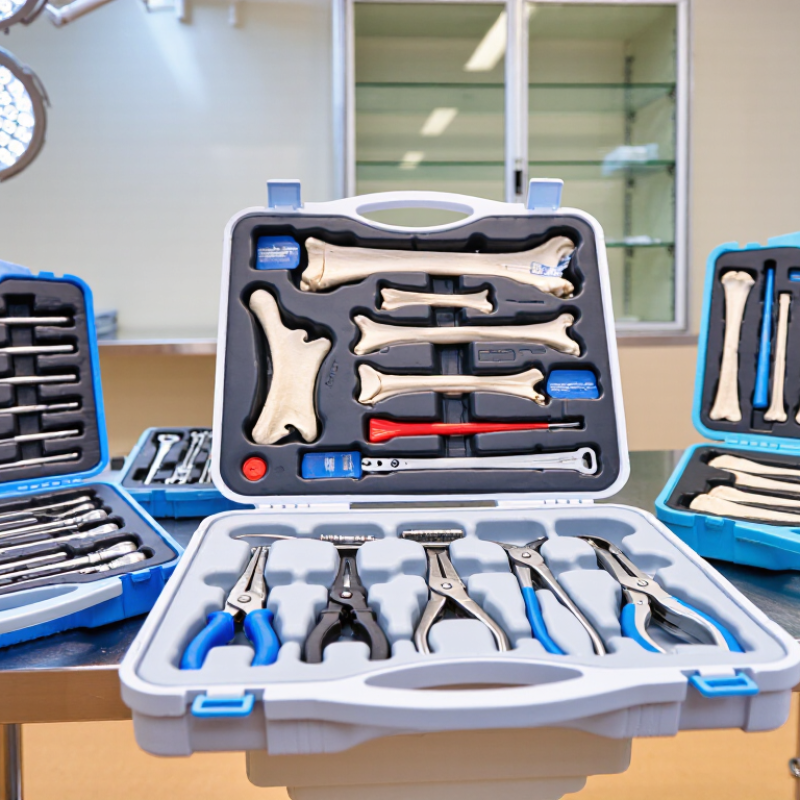
China Top Orthopedic Kits Supplier for Global Buyers

Time:2026-09-18 Author:Oliver
0%

Musculoskeletal conditions affect about 1.71 billion people worldwide, according to the World Health Organization. This burden continues to increase demand for dependable orthopedic instruments and procedure-ready Orthopedic Kits. Global buyers need more than competitive pricing. They need consistent manufacturing, clear documentation, and reliable supply continuity.

Fortune Business Insights valued the global orthopedic devices market at approximately USD 47.35 billion in 2023. Its report projects continued growth through 2032, supported by aging populations, sports injuries, and expanding surgical capacity. China has become an important manufacturing base within this supply chain. Experienced Chinese suppliers can offer trauma sets, joint replacement instruments, spinal kits, and customized orthopedic solutions. The details matter. A well-designed kit should include correctly matched instruments, protective packaging, readable labels, and a practical sterilization pathway.

Small errors matter.

However, “top supplier” should never mean the lowest quotation alone. Buyers should verify ISO 13485 certification, risk-management procedures aligned with ISO 14971, material specifications, inspection records, and product traceability. They should also review applicable registration requirements in each destination market. The International Organization for Standardization provides recognized frameworks, but certification does not replace independent supplier evaluation. That point is sometimes overlooked. A responsible supplier supports sample testing, technical communication, complaint handling, and stable lead times. Product performance can also depend on surgical technique and hospital processing. Therefore, this guide examines China-based Orthopedic Kits suppliers through quality evidence, manufacturing experience, customization capability, and long-term buyer support. No supplier is perfect. Transparency is more valuable than a polished promise.

China Top Orthopedic Kits Supplier for Global Buyers

Orthopedic Kits: Definition, Scope, and Core Medical Applications

China Top Orthopedic Kits Supplier for Global Buyers

Orthopedic Kits: Definition, Scope, and Core Medical Applications

Orthopedic kits are organized sets of surgical instruments, implants, or both. They support procedures involving bones, joints, ligaments, and the spine. A kit may contain plates, screws, drills, guides, trial components, or extraction tools. Its exact scope depends on the procedure and hospital protocol.

Common applications include fracture fixation, joint reconstruction, arthroscopy, spinal surgery, and trauma care. In a fracture case, a surgeon may need plates, screws, measuring tools, and drill guides in matching sizes. For joint replacement, trial parts help confirm alignment before the final implant is selected. Arthroscopy kits usually include slim instruments, graspers, punches, and accessories for minimally invasive work.

Details matter.

Clinical teams should review material specifications, dimensional accuracy, sterilization compatibility, packaging, and traceability. Clear instructions for use are equally important. A reliable supplier should provide technical files, inspection records, and responsive communication throughout the purchasing process. Manufacturing experience also matters, especially when buyers need consistent batches and customized configurations.

A kit can look complete on paper yet fail at the operating table. Missing adapters, unclear labels, or poor size organization can delay a procedure. No kit fits every hospital perfectly. Buyers should compare surgeon preferences, local regulations, training needs, and after-sales support before ordering. For global buyers, careful supplier audits and sample evaluation remain practical safeguards.

China Top Orthopedic Kits Supplier for Global Buyers - Orthopedic Kits: Definition, Scope, and Core Medical Applications

A practical overview of orthopedic kit categories, typical contents, clinical applications, and key purchasing considerations

Orthopedic Kit Category Definition and Scope Typical Instruments or Components Core Medical Applications Common Users Key Purchasing Considerations
Fracture Fixation Kit A set of reusable surgical instruments designed to support the reduction, stabilization, and fixation of bone fractures. Bone-holding forceps Reduction clamps Drill guides Depth gauges Screwdrivers Management of fractures involving the long bones, small bones, and periarticular regions when internal fixation is clinically indicated. Orthopedic surgeons, trauma surgeons, operating-room staff Instrument compatibility, corrosion resistance, ergonomic handling, sterilization performance, and availability of replacement instruments.
Intramedullary Nailing Instrument Set A specialized kit used to prepare the medullary canal and support the insertion and locking of intramedullary nails. Entry awls Ball-tip guidewires Reamers Nail insertion handles Locking guides Fixation of selected femoral, tibial, and humeral shaft fractures, according to patient anatomy and surgical protocol. Trauma and orthopedic surgical teams Size range, modularity, radiolucent or imaging-compatible components, alignment accuracy, and procedure-specific completeness.
External Fixation Kit A system of instruments used to place pins or wires and assemble an external frame for temporary or definitive fracture stabilization. Drill sleeves Pin drivers Wire tensioners Clamps Wrenches Temporary stabilization, damage-control orthopedics, open fractures, limb-length procedures, and selected complex deformity cases. Trauma surgeons, orthopedic surgeons, emergency surgical teams Frame versatility, pin and wire compatibility, mechanical strength, ease of adjustment, and fast intraoperative assembly.
Arthroscopy Instrument Kit A set of small-diameter instruments used through arthroscopic portals for minimally invasive joint diagnosis and treatment. Graspers Probes Punches Scissors Cannulas Arthroscopic procedures involving the knee, shoulder, hip, ankle, wrist, and elbow, including selected cartilage, meniscal, and soft-tissue treatments. Arthroscopic surgeons, orthopedic specialists, operating-room staff Tip geometry, shaft diameter, rotational control, compatibility with arthroscopy equipment, cleaning access, and tactile feedback.
Joint Replacement Instrument Set A procedure-specific kit used to prepare bone surfaces and assist with trialing and positioning during joint arthroplasty. Bone rasps Cutting guides Trial components Alignment guides Impingement tools Preparation for selected total or partial hip, knee, shoulder, and other joint replacement procedures. Arthroplasty surgeons, orthopedic operating teams Procedure-specific design, dimensional accuracy, instrument traceability, sterilization workflow, and compatibility with the intended implant system.
Spinal Surgery Instrument Kit A group of instruments used to access, decompress, align, and stabilize the spine during selected spinal procedures. Retractors Rongeurs Pedicle probes Rod benders Torque handles Decompression, deformity correction, spinal fusion, and instrumentation procedures performed according to clinical indication. Spine surgeons, neurosurgeons, orthopedic surgical teams Fine control, access depth, instrument strength, compatibility with spinal implants, radiographic visibility, and cleaning validation.
Small Bone and Hand Surgery Kit A compact instrument set intended for procedures involving the hand, wrist, foot, ankle, and other small anatomical structures. Mini retractors Small reduction clamps Wire drivers Fine rongeurs Mini screwdrivers Fixation of small-bone fractures, tendon-related procedures, joint reconstruction, and selected deformity corrections. Hand surgeons, foot-and-ankle surgeons, orthopedic specialists Instrument scale, precision, visibility in a restricted field, compatibility with small implants, and ease of delicate manipulation.
Osteotomy and Deformity Correction Kit A specialized set used to create controlled bone cuts and support correction of angular, rotational, or length-related deformities. Osteotomes Cutting guides Bone spreaders Alignment rods Measuring tools Corrective osteotomy, limb alignment procedures, malunion correction, and selected reconstructive orthopedic operations. Reconstructive orthopedic surgeons, limb-deformity specialists Cutting accuracy, measurement repeatability, alignment control, radiographic compatibility, and compatibility with fixation devices.
Bone Grafting and Harvesting Kit A collection of instruments used to harvest, prepare, deliver, or compact autologous or other clinically approved bone graft material. Graft harvesters Curettes Bone mills Graft tampers Funnels Bone defect management, spinal fusion support, nonunion treatment, and selected reconstructive procedures. Orthopedic surgeons, spine surgeons, reconstructive surgical teams Material compatibility, controlled graft handling, tissue-protection features, cleaning requirements, and instrument durability.
Basic Orthopedic Surgical Kit A general-purpose set containing core instruments for routine orthopedic exposure, dissection, retraction, cutting, grasping, and closure. Scalpels Forceps Retractors Osteotomes Surgical mallets General orthopedic procedures, fracture surgery, soft-tissue exposure, outpatient surgery, and emergency trauma care. Hospitals, ambulatory surgical centers, orthopedic departments Balanced assortment, standardized tray layout, reusable design, sterilization compatibility, instrument identification, and service support.
Reusable Instrument Tray and Sterilization Accessories Containers and accessories designed to organize, protect, transport, and process reusable orthopedic instruments. Perforated trays Silicone holders Instrument mats Container filters Identification labels Central sterile processing, operating-room preparation, instrument storage, and standardized surgical-set management. Central sterile services departments, operating-room managers, hospital procurement teams Steam sterilization compatibility, load capacity, drainage, traceability, impact protection, and compliance with applicable local requirements.

Note: Kit contents should be matched to the intended surgical procedure, instrument compatibility requirements, sterilization method, and applicable regulatory standards. Clinical use must follow qualified professional judgment and the relevant instructions for use.

Key Product Categories Offered by Chinese Orthopedic Kit Suppliers

China Top Orthopedic Kits Supplier for Global Buyers

Chinese orthopedic kit suppliers commonly organize products by surgical need. Trauma kits may include bone plates, screws, drill guides, and reduction instruments. Spine kits often cover decompression, fixation, and interbody procedures. Joint replacement sets require trial components, broaches, impactors, and precise sizing tools. Sports medicine kits usually contain anchors, suture passers, and arthroscopy accessories. External fixation sets add clamps, rods, pins, and adjustable connectors. The details matter.

The World Health Organization reported that about 1.71 billion people live with musculoskeletal conditions in 2022. This broad burden supports continued demand for reliable orthopedic equipment. Grand View Research valued the global orthopedic devices market at approximately USD 57.8 billion in 2023, with projected growth through 2030. Market figures vary by report scope. That difference deserves attention, not dismissal.

For global buyers, supplier evaluation should go beyond catalog size. Check material certificates, dimensional tolerances, sterilization compatibility, packaging records, and traceability files. Ask for sample kits before approving larger orders. Instrument balance is easy to overlook. A poorly fitted driver can slow a procedure and increase handling risk. Suppliers with documented quality systems and inspection records provide stronger evidence of reliability. Yet no factory is flawless. Communication gaps, incomplete drawings, or delayed revisions can still occur. Careful technical review remains necessary, especially for mixed kits assembled for different hospital workflows.

Key Product Categories Offered by Chinese Orthopedic Kit Suppliers

Representative kit types commonly supplied for global orthopedic procedures. Values show the number of kit types included in this comparison, not market share.

The categories cover trauma fixation, spinal surgery, joint replacement, sports medicine, and external fixation. Typical products include plates, screws, intramedullary nails, spinal cages, pedicle screw systems, arthroplasty instruments, arthroscopy tools, and external fixators.

Quality Standards and Manufacturing Processes for Global Buyers

China Top Orthopedic Kits Supplier for Global Buyers

Quality begins with traceability, not polished packaging. Grand View Research estimated the global orthopedic devices market at about USD 48.6 billion in 2023, with continued growth through 2030. That expansion increases pressure on suppliers to prove consistency. Each orthopedic kit should carry a batch code, material record, inspection result, and sterilization status. Our practical checks include dimensional testing, surface inspection, hardness testing, and packaging-seal verification. Small deviations matter.

Manufacturing should follow a controlled quality system aligned with ISO 13485. Incoming stainless steel is checked against chemical and mechanical specifications before machining. CNC processing creates repeatable dimensions, while deburring removes sharp edges around screw holes and instrument tips. Cleaning uses validated stages, followed by controlled assembly in a low-particle environment. Where applicable, sterilization validation and packaging integrity testing support safe distribution. ASTM methods can also guide implant and instrument performance evaluations.

WHO reported that about 2.4 billion people may benefit from rehabilitation services, showing the wider need for dependable orthopedic care. Yet compliance documents alone do not guarantee field performance. A perfect inspection report can miss handling damage after shipment. That is the uncomfortable part. Suppliers should review complaints, monitor nonconformities, and improve procedures continuously. Global buyers should request sample records, audit evidence, test reports, and clear change-control procedures before approving production. Reliability is built repeatedly.

How to Evaluate a Reliable China-Based Orthopedic Kit Supplier

China Top Orthopedic Kits Supplier for Global Buyers

A reliable China-based orthopedic kit supplier should prove control, not just offer a low quotation. The ISO Survey 2023 recorded more than 30,000 ISO 13485 certificates worldwide, but certification alone does not guarantee consistent products. Request the certificate scope, audit date, production address, and sample records. Check whether the supplier controls implant materials, instrument dimensions, packaging, sterilization, and lot traceability. Ask for test reports from qualified laboratories, not screenshots made for sales presentations.

WHO’s 2022 Global Report on Assistive Technology estimates that more than 2.5 billion people need at least one assistive product. This growing demand makes supply continuity important. Review annual capacity, critical-material sourcing, inspection staff, and backup production plans. A factory tour, video audit, or independent inspection can reveal details that brochures hide. We have seen attractive samples fail during repeated instrument handling. That experience is easy to overlook.

Tips: Compare three recent production lots. Confirm shelf-life evidence and sterilization validation. Ask for complaint-response timelines. Verify labeling and documentation against the destination market’s rules. A supplier should answer difficult questions clearly. Silence is data, too.

International Sourcing, Compliance, and Logistics Considerations

China is a major sourcing base for orthopedic kits, but price should not lead the decision.
Grand View Research valued the global orthopedic devices market at approximately USD 47.4 billion in 2023. Demand is growing, yet procurement risks are also becoming more visible. Buyers should verify manufacturing experience, product traceability, and documented quality controls before negotiating volume.

Compliance begins with the destination market.
A reliable supplier should provide technical files, risk-management records, material certificates, sterilization evidence, and batch-level inspection reports when applicable. ISO 13485 alignment supports a consistent quality system, but certification alone proves little. Check the certificate scope and issuing body. No checklist is perfect. Human review still matters, especially for labeling, packaging, and intended use.

Logistics planning needs equal attention.
WHO and UNICEF reported in 2022 that more than 2.5 billion people need assistive products, with demand expected to exceed 3.5 billion by 2050. This pressure makes dependable supply planning essential. Confirm carton dimensions, instrument protection, humidity control, and shipment documentation before production. For sterile products, validate shelf-life data and transport conditions. Air freight may reduce delays, while sea freight usually lowers cost. The cheaper option can still become expensive after customs holds, damaged trays, or missing documents. A pilot order, pre-shipment inspection, and defined corrective-action process create better evidence than promises.

FAQS

What quality records should each orthopedic kit include?

Each kit should have a batch code, material record, inspection result, and sterilization status. Small details matter. Missing records create avoidable uncertainty.

How should incoming stainless steel be checked?

Inspect chemical composition and mechanical properties before machining. The material should match approved specifications. A certificate alone may not reveal every problem.

Which manufacturing steps help maintain consistent dimensions?

CNC processing supports repeatable dimensions, while deburring removes sharp edges around holes and instrument tips. Cleaning should use validated stages. Assembly needs a controlled, low-particle environment.

Does quality certification guarantee reliable orthopedic kits?

No. Certification supports a quality system, but it does not prove consistent field performance. Check the certificate scope, audit date, production address, and sample records. That gap deserves attention.

How can buyers evaluate a supplier before approving production?

Request recent lot records, laboratory test reports, audit evidence, and change-control procedures. Compare three production lots. A factory visit or independent inspection can expose hidden weaknesses.

What should buyers check for sterile products?

Review sterilization validation, packaging integrity, shelf-life evidence, and transport conditions. Inspect sealed trays carefully. A damaged package can undermine an acceptable inspection report.

Which logistics details require confirmation before production?

Confirm carton dimensions, instrument protection, humidity control, and shipment documentation. Air freight may reduce delays. Sea freight often costs less, but delays can become expensive.

How should suppliers handle complaints and nonconformities?

Suppliers should investigate complaints, document corrective actions, and monitor repeated failures. Ask for response timelines. Silence is data, too. No process is perfect, so continuous review remains necessary.

Conclusion

Orthopedic Kits are specialized collections of surgical instruments, fixation devices, and supporting components designed for orthopedic procedures involving trauma, joints, bones, and soft tissues. This overview explains their main applications and product categories, including fracture fixation sets, external fixation systems, joint surgery instruments, spinal procedure tools, and related accessories. It also highlights how Chinese suppliers organize product portfolios to meet the needs of hospitals, distributors, and medical procurement teams worldwide.

For global buyers, selecting a reliable China-based orthopedic kit supplier requires careful assessment of material quality, precision manufacturing, sterilization controls, documentation, and applicable quality management systems. Buyers should also review product testing, traceability, customization capabilities, packaging, and after-sales support. International sourcing requires attention to import regulations, registration requirements, labeling, shipping conditions, customs documentation, and delivery schedules. A well-qualified supplier should provide transparent communication and consistent compliance support, helping customers manage procurement risks while maintaining product safety and dependable supply.

Oliver

Oliver

Oliver is a seasoned marketing professional with a wealth of expertise in driving brand awareness and engagement. With a deep understanding of our company's product offerings, he consistently delivers high-quality content that enriches our professional blog. His insights not only shed light on......