China Top Trauma Devices Manufacturers and Suppliers?

Time:2026-10-22 Author:Sophia
0%

China has become an important source of trauma implants and surgical instruments for hospitals worldwide. Its manufacturing base includes producers of bone plates, screws, intramedullary nails, external fixators, and related tools. This guide examines leading China Trauma Devices manufacturers and suppliers through practical, evidence-based criteria. Product quality matters, but it is only one part of a dependable supply relationship.

Experienced buyers should review material certificates, dimensional inspection records, sterilization controls, packaging integrity, and device traceability. Stainless steel and titanium products should match declared standards and clinical requirements. Supplier audits can reveal details that brochures often hide, such as inspection frequency, cleanroom practices, and staff training. Ask for documentation.

Regulatory experience is equally important. A capable supplier should explain its quality-management system, product registrations, risk controls, and post-market support clearly. ISO 13485 certification may indicate structured processes, but it does not replace independent verification or clinical judgment. Buyers should also assess communication speed, production capacity, minimum order quantities, and replacement procedures. Small details matter.

This market is broad.

Some suppliers are strong in custom machining, while others perform better with standardized implant families. Pricing alone can mislead, especially when testing, logistics, and technical support are excluded. Product photographs cannot confirm fatigue resistance or surgical usability. A careful comparison therefore combines factory evidence, surgeon feedback, regulatory records, and sample evaluation. No supplier is perfect. Even established manufacturers may require closer review when specifications change, export conditions shift, or new clinical needs arise. The following overview offers a practical starting point for identifying reliable China Trauma Devices partners.
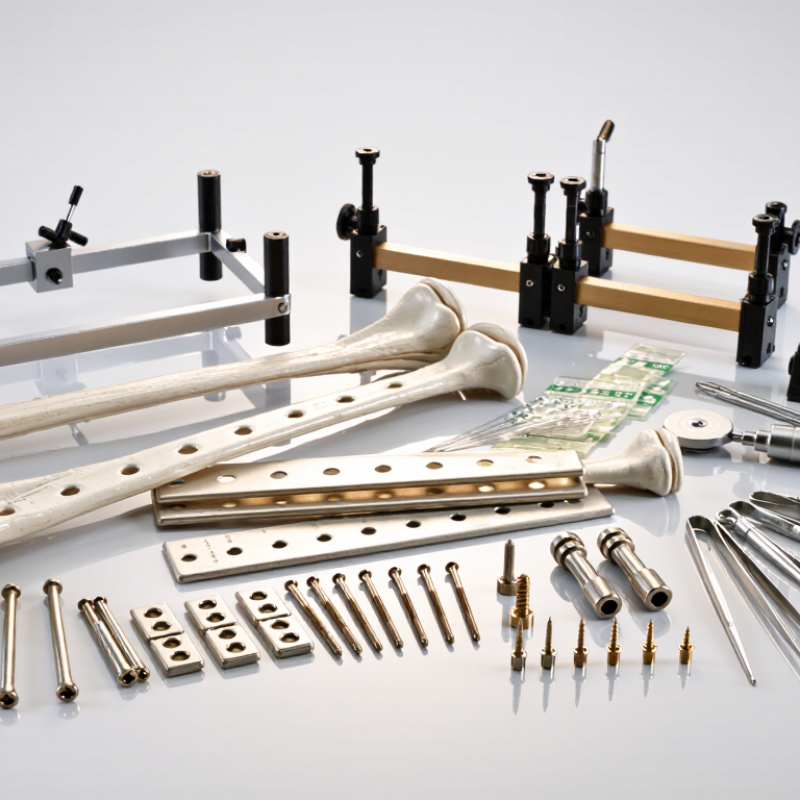
China Top Trauma Devices Manufacturers and Suppliers?

China’s Trauma Device Industry: Scope, Products, and Market Role

China’s trauma-device industry spans product design, precision machining, sterilization, clinical training, and hospital supply. Its scope extends beyond implants. It includes plates, screws, intramedullary nails, external fixators, bone substitutes, and surgical instruments. These products support fracture fixation in emergency, orthopedic, and reconstructive care.

The market’s role is becoming more visible. MarketsandMarkets estimates the global orthopedic trauma devices market will grow from about USD 8.4 billion in 2023 to USD 11.8 billion by 2028. China contributes through large clinical demand and expanding manufacturing capacity. The China Medical Device Industry Development Report also identifies domestic innovation and supply-chain control as major industry priorities.

Manufacturing details matter. Titanium alloys, surface finishing, dimensional accuracy, and sterile packaging can directly affect surgical performance.

Quality remains uneven across suppliers. That is not a comfortable point, but it deserves attention. A lower price does not automatically indicate efficiency. It may reflect different testing depth, training support, or post-market monitoring. The NMPA’s regulatory framework requires Class III implantable devices to meet strict registration and clinical evidence requirements. Buyers should examine test reports, traceability records, surgeon feedback, and delivery consistency. A strong supplier should explain alloy selection clearly and provide practical technical support. Market growth looks promising, yet reliable evidence matters more than impressive catalog numbers.

Key Trauma Device Categories Produced in China

China’s trauma-device industry produces several practical categories for fracture care. Internal fixation plates and screws support broken wrists, ankles, hips, and long bones. Intramedullary nails stabilize femoral and tibial fractures from inside the bone. External fixators help manage open injuries, swelling, and complex limb reconstruction.

Spinal trauma systems include pedicle screws, rods, cages, and fixation tools. Maxillofacial plates address facial fractures with smaller profiles and carefully shaped contours. China also supplies surgical instruments, drill systems, guidewires, and sterile packaging. MarketsandMarkets projected the global orthopedic trauma devices market to grow from about US$8.7 billion in 2023 to US$11.5 billion by 2028. Demand remains linked to road injuries, falls, and aging populations. The World Health Organization reports roughly 1.19 million road-traffic deaths each year.

Product selection requires more than comparing unit prices. Buyers should review material certificates, dimensional inspection records, sterilization validation, fatigue testing, and traceability procedures. Titanium alloy implants need consistent surface finishing. Screws must show reliable thread geometry and insertion performance. Factory audits should examine cleanroom controls, calibration records, and complaint handling.

The difficult part is consistency. A polished sample can hide uneven batch control. Suppliers should provide test evidence, not confident promises. Clinical feedback also matters, although it is sometimes incomplete. That gap deserves attention. Lower cost may help hospitals, but poor fit or delayed delivery can create greater clinical and financial pressure.

Leading Chinese Trauma Device Manufacturers and Suppliers

China’s leading trauma device manufacturers and suppliers serve hospitals, distributors, and orthopedic care teams worldwide. Their product ranges may include bone plates, screws, intramedullary nails, external fixation systems, and surgical instruments. Strong manufacturers combine precision machining with documented quality controls. They also study surgeon feedback from real procedures, not only laboratory results.

Look for suppliers that provide material certificates, dimensional inspection records, sterilization guidance, and clear traceability. A dependable factory should identify the alloy, coating, batch number, and packaging condition for every product. Samples can reveal practical details. Check screw thread consistency, plate edge finishing, instrument grip, and package labels. Small defects matter in trauma surgery.

No factory is perfect. That deserves honest review. Some suppliers may offer broad catalogs but limited clinical experience. Others may have capable engineers but weaker communication after delivery. Buyers should assess production capacity, quality audits, regulatory documentation, and response times before placing orders. Video inspections can show clean assembly areas, calibration records, and storage conditions. Independent testing may also support purchasing decisions. Price matters, but an unexplained low quote can hide gaps in inspection, training, or after-sales support. Reliable partnerships grow through transparent evidence, careful sampling, and regular performance reviews.

China Orthopedic Trauma Device Market Context: Population Aged 65+

China’s population aged 65 and above increased from 190.64 million in 2020 to 220.23 million in 2024. This demographic trend is a relevant demand-context indicator for orthopedic trauma devices, including fixation plates, screws, intramedullary nails, and external fixation systems. The figures represent population data, not sales or market-share data for individual manufacturers.

Source: National Bureau of Statistics of China, national economic and social development statistical communiqués, 2020–2024.

Quality Standards, Certifications, and Regulatory Compliance

China’s trauma device manufacturers and suppliers should be assessed through documented quality systems, not attractive catalogs alone. In practice, ISO 13485 certification is a useful starting point, but it does not replace product-specific evidence. Buyers should review design controls, supplier qualification, batch records, and complaint handling procedures. A certificate can expire or cover only part of a facility.

Regulatory compliance must match the destination market. Products sold in China may require NMPA registration and applicable GB standards. European distribution generally involves MDR requirements, clinical evaluation, risk management, and appropriate conformity assessment. The United States may require FDA clearance or another applicable pathway. ISO 14971-based risk analysis should connect directly to hazards such as implant breakage, sharp edges, corrosion, and incorrect sizing.

Look closely at sterilization validation, biocompatibility testing, packaging integrity, and lot traceability. Ask for raw material certificates and inspection records, not only polished summaries. During supplier audits, physical details matter: labeled quarantine areas, calibrated measuring tools, and clean production surfaces reveal daily discipline. No supplier gets every process perfect. Even experienced teams may leave weak evidence in change control or post-market monitoring. That is where careful questions matter. A reliable partner responds clearly, accepts scrutiny, and can explain what changed, why it changed, and how patient safety was protected.

China Top Trauma Devices Manufacturers and Suppliers? - Quality Standards, Certifications, and Regulatory Compliance

Trauma Device Category Typical Products Common Materials Key Quality and Safety Standards China Regulatory Considerations Evidence to Request from a Supplier
Fracture Fixation Systems Bone plates, screws, locking plates, intramedullary nails, external fixation components Titanium and titanium alloys, stainless steel, cobalt-chromium alloys, PEEK in selected applications ISO 13485; ISO 14971; ISO 10993 series; applicable ASTM or ISO material and mechanical test methods Product classification, registration or filing, technical documentation, type testing, and post-market surveillance under NMPA requirements Valid quality-management certificate, material certificates, design verification, fatigue and static testing, sterilization information, and traceability records
Spinal Trauma Implants Pedicle screw systems, rods, hooks, spinal plates, cages, and stabilization systems Titanium alloys, stainless steel, cobalt-chromium alloys, PEEK, and tantalum in specific designs ISO 13485; ISO 14971; ISO 10993; applicable spinal implant mechanical testing standards and validated cleaning processes Clinical evaluation, risk analysis, product technical requirements, registration testing, labeling, and adverse-event reporting may be required Implant configuration drawings, torque and pull-out test results, sterilization validation, biocompatibility assessment, and change-control procedures
Maxillofacial and Cranial Implants Cranial plates, facial plates, mini-plates, mini-screws, orbital repair systems Titanium, titanium alloys, PEEK, and resorbable polymers for selected applications ISO 13485; ISO 14971; ISO 10993; dimensional, strength, corrosion, and packaging validation as applicable Patient-contact duration and intended anatomical use influence biocompatibility and regulatory documentation requirements Dimensional inspection reports, material composition, corrosion testing, biocompatibility rationale, shelf-life data, and artwork approval records
External Fixation Systems Pins, clamps, rods, rings, frames, and modular fixation assemblies Stainless steel, titanium alloys, aluminum alloys, and engineering polymers ISO 13485; ISO 14971; ISO 10993 for patient-contacting parts; mechanical strength and corrosion evaluations Reusable components require validated cleaning, disinfection, and sterilization instructions where applicable Assembly instructions, compatibility data, reuse validation, mechanical test reports, inspection criteria, and complaint-handling procedures
Trauma Power Tools Orthopedic drills, saws, reamers, handpieces, batteries, chargers, and accessories Stainless steel, aluminum alloys, medical-grade polymers, lithium-ion battery systems ISO 13485; ISO 14971; IEC 60601-1 where applicable; IEC 60601-1-2 for electromagnetic compatibility where applicable Electrical safety, EMC, battery safety, software or firmware controls, and reusable-device reprocessing instructions may apply Electrical safety and EMC reports, battery documentation, software validation, ingress protection data, maintenance instructions, and service records
Surgical Instruments Reduction forceps, cutting guides, retractors, screwdrivers, targeting guides, and instrument trays Stainless steel, titanium alloys, aluminum alloys, and medical-grade polymers ISO 13485; ISO 14971; ISO 17664 for reprocessing information; applicable instrument material and performance standards Reusable-device labeling must clearly define cleaning, disinfection, inspection, packaging, and sterilization procedures Reprocessing validation, corrosion and durability testing, dimensional inspection, passivation records, and packaging specifications
Wound and Hemorrhage-Control Products Hemostatic dressings, wound drains, negative-pressure accessories, and trauma wound-care products Nonwoven materials, polymers, absorbent fibers, silicone, and other medical-grade materials ISO 13485; ISO 14971; ISO 10993; ISO 11135 or ISO 11137 when applicable to sterilization Sterility claims, shelf life, biological safety, packaging integrity, and intended-use claims must be supported by technical evidence Sterilization validation, biocompatibility reports, absorbency or performance testing, package integrity data, and stability studies
Sterile Packaging and Procedure Sets Sterile trays, procedure kits, implant packaging, protective cases, and custom surgical sets Medical-grade Tyvek-type materials, paper, rigid polymers, films, stainless steel, and silicone components ISO 11607 for terminally sterilized medical-device packaging; ISO 13485; applicable seal-strength and integrity methods Packaging must preserve sterility through specified storage, transport, and shelf-life conditions Packaging validation protocol, seal-strength results, integrity testing, accelerated-aging rationale, transport simulation, and labeling controls
Core compliance references: ISO 13485:2016 quality management systems for medical devices; ISO 14971:2019 application of risk management to medical devices; ISO 10993 series biological evaluation; ISO 11607 series packaging for terminally sterilized medical devices; ISO 11135 for ethylene oxide sterilization; ISO 11137 series for radiation sterilization; ISO 17664 series for processing information for reusable medical devices; and applicable IEC 60601 standards for electrically powered medical equipment.

Regulatory classification, registration, testing, and certification requirements depend on the device design, intended use, sterilization status, patient-contact duration, and target market. Supplier certificates should be verified for scope, validity, issuing body, and the specific manufacturing site.

How to Evaluate and Select a Chinese Trauma Device Supplier

Selecting a Chinese trauma device supplier requires more than comparing prices. The supplier should show valid quality certifications, product registrations, and documented manufacturing controls. Ask for batch records, material specifications, and sterilization reports. Clear evidence matters.

Request samples from the same production line used for commercial orders. Inspect implant surfaces, instrument fit, packaging seals, and label accuracy. A factory audit can reveal storage problems, weak traceability, or rushed inspection steps. Video tours help, but they are not enough. On-site verification remains stronger.

Review the supplier’s experience with hospitals, distributors, and international shipments. Ask how complaints are investigated and how corrective actions are documented. Response time matters during an urgent shortage. Confirm production capacity with recent records, not promises. Check whether design changes receive formal approval before delivery. Communication should be precise, especially for dimensions, alloys, and packaging requirements.

Do not ignore clinical evidence. Technical files should explain intended use, testing methods, and known limitations. Independent laboratory reports can support, but not replace, regulatory review. The lowest quotation may hide costs for inspection, rework, or delayed customs clearance. That mistake is easy to make. A written quality agreement should define acceptance criteria, audits, delivery terms, and responsibility for nonconforming products. Some evaluations still rely too heavily on polished presentations. A careful, repeatable assessment is less exciting, but usually more dependable.

FAQS

What quality documents should buyers request from a trauma device supplier?

Request quality certificates, batch records, material certificates, inspection reports, and complaint procedures. Check certificate scope and expiration dates. A certificate alone proves little.

How can buyers verify regulatory readiness for different markets?

Match the supplier’s documents with the destination market’s registration and safety requirements. Review technical files, clinical evaluations, risk records, and conformity evidence. Requirements differ.

What manufacturing details deserve attention during a factory audit?

Inspect quarantine areas, calibrated tools, storage conditions, and production surfaces. Check how materials and finished products are labeled. Small details expose daily discipline.

Should buyers inspect samples before placing commercial orders?

Yes. Request samples from the same production line used for regular orders. Examine implant surfaces, instrument fit, package seals, and label accuracy. Samples can mislead if production changes later.

How should sterilization and packaging controls be evaluated?

Review sterilization validation, packaging integrity tests, and lot traceability records. Confirm whether damaged seals are rejected. Ask how long records remain available.

What risks should a supplier’s risk analysis address?

It should address breakage, sharp edges, corrosion, incorrect sizing, and other foreseeable hazards. Controls must connect with testing and design decisions. Vague risk tables are weak evidence.

How can buyers evaluate complaint handling and corrective actions?

Ask for anonymized complaint examples and investigation timelines. Review root-cause analysis, corrective actions, and effectiveness checks. Fast replies help, but clear records matter more.

Why should buyers avoid choosing only the lowest quotation?

A low price may hide inspection, rework, shipping, or customs-related costs. Compare total risk, not only unit price. Cheap can become expensive.

What should a written quality agreement include?

Define acceptance criteria, audits, delivery terms, change approvals, and responsibility for nonconforming products. Include communication deadlines and documentation requirements. Gaps happen.

What weaknesses may remain after a careful supplier assessment?

Change control or post-market monitoring may still contain weak evidence. No supplier performs every process perfectly. Recheck critical information before approval.

Conclusion

China’s trauma device industry has become an important part of the global medical manufacturing landscape, offering a broad range of products for fracture fixation, orthopedic repair, wound management, and emergency care. Trauma Devices produced in China include plates, screws, intramedullary nails, external fixation systems, surgical instruments, and related accessories. Manufacturers and suppliers serve hospitals, distributors, and healthcare projects through increasingly organized production and supply networks.

When selecting a Chinese trauma device supplier, buyers should assess product quality, manufacturing capabilities, research and development strength, delivery reliability, and after-sales service. Attention should also be given to quality management systems, product testing, sterilization controls, and compliance with applicable regulatory requirements in the target market. A careful evaluation of documentation, production facilities, quality records, communication, and customization capacity can help buyers identify dependable partners and reduce supply risks while supporting safe and consistent clinical use.

Sophia

Sophia

Sophia is a dedicated marketing professional with an exceptional depth of knowledge about her company's products and services. With a keen understanding of market trends and customer needs, she crafts insightful blog posts that not only inform but also engage readers, enriching the company’s online......