China Top Screw Fixation Manufacturers and Suppliers

Time:2026-10-13 Author:Charlotte
0%

China has become an important sourcing market for Screw Fixation products, supported by machining capacity, engineering talent, and established medical manufacturing networks. However, supplier selection requires more than comparing prices. Product consistency, material control, sterilization capability, and documentation can directly affect clinical reliability.

This guide examines China’s top Screw Fixation manufacturers and suppliers through practical evaluation criteria. It considers implant design, titanium or stainless-steel grades, CNC precision, thread accuracy, surface finishing, packaging, and batch traceability. Factory experience matters. A capable supplier should explain its inspection process clearly, provide usable samples, and respond with technical evidence rather than broad promises. Certifications and quality systems should also be checked against the destination market’s applicable requirements.

Details matter.

Supplier audits may include production-floor observations, calibration records, incoming material checks, and final inspection reports. Communication is equally important. Drawings, tolerances, labeling, and change-control procedures must remain consistent from quotation to delivery. Some manufacturers offer strong engineering support, while others mainly provide cost-efficient production. These strengths are not identical.

A low quotation can hide testing limits, unclear responsibilities, or inconsistent lead times. That warning is easy to overlook. This article therefore compares capabilities carefully, while recognizing that no supplier is perfect in every category. Readers can use the information to shortlist reliable partners, ask sharper questions, and verify claims independently before placing an order. The goal is not to promote one factory, but to support safer, more informed sourcing decisions.
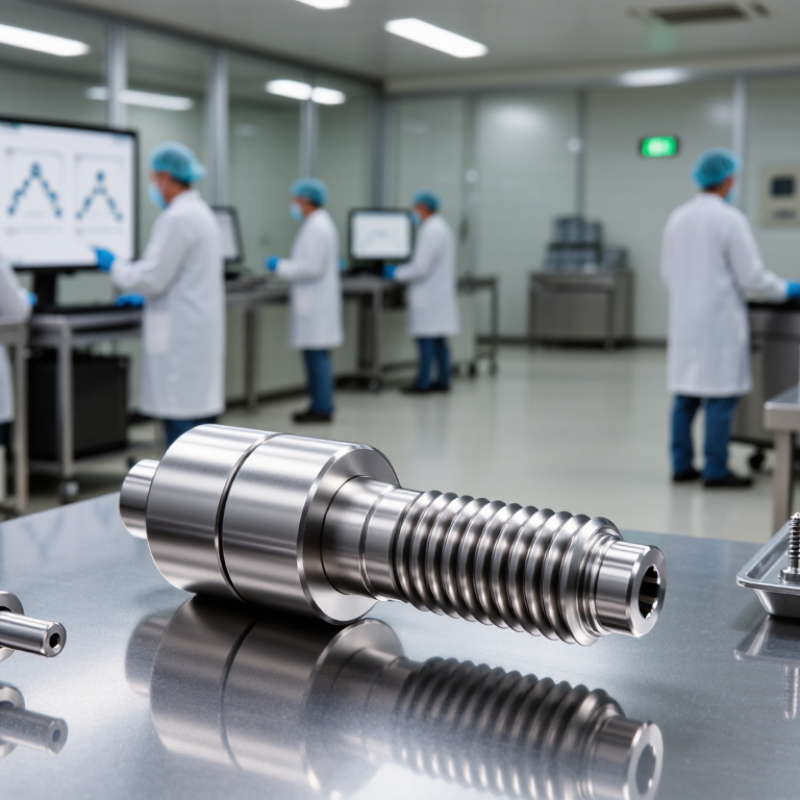
China Top Screw Fixation Manufacturers and Suppliers

Types of Screw Fixation Systems Manufactured in China

China Top Screw Fixation Manufacturers and Suppliers

China produces several screw fixation systems for orthopedic, spinal, dental, and trauma applications. Common types include cortical screws, cancellous screws, cannulated screws, and locking screws. Each design serves a different bone structure and surgical technique. Cannulated screws, for example, follow a guidewire through a narrow incision. This improves placement control, especially during fracture repair.

Spinal fixation systems often combine pedicle screws, rods, connectors, and transverse links. Trauma systems may include locking plates with compatible screws for the wrist, ankle, femur, or tibia. Maxillofacial systems use smaller plates and low-profile screws around delicate facial bones. Manufacturers commonly use titanium alloy or surgical stainless steel. Surface finish matters. Sharp edges can irritate tissue and complicate handling.

A dependable supplier should provide dimensional reports, material certificates, fatigue testing, and traceability records. Production teams also need controlled machining, cleaning, packaging, and inspection processes. ISO 13485-based quality systems can support consistent manufacturing, but certification alone is not enough. The real test is repeatable performance across production batches. A polished catalog may hide practical gaps. Thread fit, driver engagement, and instrument compatibility deserve direct review. No fixation system is perfect; surgeon feedback may reveal weaknesses that laboratory data misses. Careful evaluation remains necessary.

Key Standards for Evaluating Chinese Screw Fixation Suppliers

China Top Screw Fixation Manufacturers and Suppliers

When evaluating Chinese screw fixation suppliers, price should come after clinical and manufacturing evidence. A 2024 orthopedic devices market report estimated the global market at more than US$50 billion, but forecasts vary widely. That difference is a useful warning: market data needs context. Ask suppliers for product-specific records, not broad claims.

ISO 13485 certification should cover the actual manufacturing site and relevant implant scope. ISO 14971 procedures should connect hazards with design controls, inspection, and post-market monitoring. For bone screws, ASTM F543 testing can assess torsional performance and insertion behavior. ASTM F382 may support evaluation of metallic implant components. Material certificates should identify the alloy, heat treatment, and traceability lot.

Check sterilization validation, packaging integrity, and simulated-use testing. Review inspection records for thread form, head dimensions, surface finish, and coating thickness. A reliable supplier should explain nonconforming-product control without hesitation. Ask for sample batch records and audit findings.

Small details matter.

Experience is visible on the factory floor. Operators should know how samples are selected and retained. Engineers should explain test limits in practical language. A 2023 ISO industry survey reported tens of thousands of ISO 13485 certificates worldwide, so certification alone cannot prove supplier capability. I would also compare complaint rates, delivery consistency, and corrective-action closure time. No supplier is flawless. Evasive answers are the bigger concern.

Leading Manufacturing Regions and Production Capabilities in China

China’s screw fixation manufacturing base is concentrated in several capable industrial regions. Jiangsu supports precision machining, implant-grade material processing, and controlled surface finishing. Zhejiang is known for flexible production, tooling development, and efficient small-batch supply. Guangdong adds strong automation, inspection equipment, and export-oriented engineering services. Shandong also contributes metal processing capacity, especially for larger orthopedic and industrial components.

Production capability varies widely between suppliers. Qualified facilities should show documented material certificates, lot traceability, calibrated measuring equipment, and repeatable sterilization or packaging controls when medical use is involved. Titanium and stainless steel parts commonly require CNC machining, thread inspection, ultrasonic cleaning, and surface treatment. Experienced manufacturers can provide prototype sampling before mass production. That step matters.

Supplier evaluation needs more than a polished factory visit. Ask for process validation records, inspection plans, dimensional reports, and corrective-action evidence. A reliable supplier should explain tolerances in practical terms, not only display certificates. Production lines may appear advanced, yet operator training and record accuracy can still be inconsistent. This is an area worth questioning.

Some manufacturers handle design support, tooling, machining, cleaning, packaging, and final inspection under one system. Others outsource critical processes, which can increase communication gaps. Buyers should confirm who controls each stage, how changes are approved, and how rejected parts are isolated. Regional strength helps, but process discipline remains the real differentiator.

Quality Control and Regulatory Compliance in Screw Fixation Production

Quality control defines the reliability of screw fixation products made by Chinese manufacturers and suppliers. A controlled production line begins with verified titanium or stainless-steel material certificates. Each batch should carry a traceable lot number. Operators then inspect thread geometry, head dimensions, surface finish, and mechanical strength.

Small details matter. A damaged thread can affect insertion torque. An uneven coating may increase corrosion risk. Coordinate measuring machines check critical dimensions, while torque testers verify performance against approved specifications. Fatigue testing also examines how screws respond to repeated loading. Inspection records should remain complete, legible, and linked to the finished product.

Regulatory compliance requires more than passing a final inspection. A capable supplier maintains documented procedures, trained personnel, equipment calibration, supplier evaluations, and controlled design changes. Quality systems aligned with medical-device requirements can support consistent manufacturing and audit readiness. Production environments may also require validated cleaning, packaging, and sterilization processes, depending on the product and intended use.

No system is flawless. A misplaced label or incomplete inspection record can reveal a wider process weakness. For this reason, manufacturers should investigate nonconformities, document root causes, and verify corrective actions. Internal audits, risk assessments, and periodic process reviews provide useful evidence of reliability. Buyers should request objective records, not broad promises. Clear communication about testing limits, lead times, and regulatory documentation builds stronger supplier relationships.

How to Select a Reliable Chinese Screw Fixation Manufacturer

How to Select a Reliable Chinese Screw Fixation Manufacturer

Selecting a Chinese screw fixation manufacturer requires evidence, not attractive catalogs. A 2024 Grand View Research report estimated the global orthopedic devices market at over USD 47 billion, increasing pressure on suppliers to scale without weakening quality. Ask for an ISO 13485 certificate, product scope, and recent audit records. The certificate should cover screw fixation products, not only general medical accessories. Verify registration status and quality responsibilities before discussing price.

Request material certificates for titanium or stainless steel, including chemical composition and lot numbers. ASTM F543 covers testing methods for metallic medical bone screws, including driving torque and pull-out strength. A dependable factory should provide complete test reports, calibration records, and sampling procedures. Inspect CNC machining areas, cleaning rooms, packaging lines, and quarantine zones. Look for clear labels on every tray. Traceability must connect raw material, machine, operator, inspection result, and shipment.

Do not rely on a polished factory tour. I once treated fast answers as proof of competence; that was a weak assumption. Ask for a pilot batch and inspect thread form, head geometry, surface finish, and packaging seals. Compare independent laboratory results with factory data. A 2023 Fortune Business Insights report identified aging populations and trauma care as major orthopedic-device demand drivers, but demand alone does not guarantee supplier reliability. Delivery history, corrective-action speed, change-control procedures, and communication in English deserve equal attention. A low quotation may hide testing gaps.

China Top Screw Fixation Manufacturers and Suppliers - How to Select a Reliable Chinese Screw Fixation Manufacturer
Selection Dimension What a Reliable Supplier Should Offer Documents or Data to Verify Typical Purchasing Risk Recommended Check
Product Range A clearly defined range of machine screws, self-tapping screws, thread-forming screws, wood screws, or other application-specific fasteners. Technical catalogue, dimensional drawings, thread specifications, available head types, drive styles, and minimum order quantities. Medium Match the supplier’s standard range with the required application before requesting custom tooling.
Material Selection Material options should correspond to the application, such as carbon steel, alloy steel, stainless steel grades 304 or 316, or other approved materials. Material test certificate, chemical composition report, heat number, and traceability procedure. High Require material certification for each production batch.
Mechanical Performance Strength, hardness, proof load, tensile performance, and other properties must meet the specified fastener class or project requirement. Inspection reports referencing ISO 898-1 for carbon or alloy steel fasteners, or the applicable ASTM, DIN, or customer specification. High Approve samples only after independent or witnessed mechanical testing.
Dimensional Accuracy Thread diameter, pitch, length, head dimensions, point geometry, and tolerances should remain consistent throughout the batch. Approved drawings, calibrated gauges, thread plug and ring gauge records, first-article inspection, and final inspection reports. High Define critical dimensions and acceptance tolerances in the purchase order.
Surface Treatment The selected finish should suit the environment, including plain, zinc-plated, zinc-flake, black oxide, passivated stainless steel, or other specified treatments. Coating specification, coating thickness results, appearance standard, salt-spray report where applicable, and RoHS or REACH declarations if required. High Confirm coating thickness, corrosion requirement, color, and prohibited substances in writing.
Quality Management A documented quality system should control incoming materials, production inspections, nonconforming products, corrective actions, and final release. Valid ISO 9001 certificate, quality manual excerpt, process-control plan, inspection records, and recent corrective-action examples. High Verify certificate validity and conduct a remote or on-site audit for critical projects.
Production Capacity The supplier should have suitable heading, threading, heat-treatment, surface-finishing, sorting, and packaging capacity for the expected order volume. Production-flow chart, equipment list, monthly capacity estimate, lead-time schedule, and subcontracting disclosure. Medium Compare forecast demand with confirmed capacity and seasonal production constraints.
Sample and Tooling Control Samples should be produced from the intended material and process, while custom dies and tooling should be controlled and maintained. Sample inspection report, tooling approval record, revision history, and confirmation that production samples are representative. High Use a signed first-article approval before mass production.
Traceability Finished products should be traceable to the raw material batch, production date, inspection record, and packaging lot. Lot-number system, packing labels, batch records, material certificates, and retention policy for quality documents. High Require lot identification on cartons and shipping documents.
Export and Packaging Capability Products should be packed to prevent mixing, corrosion, mechanical damage, and moisture exposure during international transportation. Packaging specification, carton markings, pallet details, export documentation process, and sample shipping carton. Medium Approve packaging artwork and carton strength before shipment.
Inspection and Testing Inspection should cover appearance, dimensions, threads, hardness, mechanical properties, coating, quantity, and packaging. Inspection plan, calibrated instrument list, sampling standard such as ISO 2859-1, and third-party inspection acceptance criteria. High Set an agreed sampling plan and define critical, major, and minor defects.
Commercial Reliability Quotations should clearly state material, grade, finish, dimensions, tooling charges, lead time, payment terms, and validity period. Detailed quotation, pro forma invoice, production schedule, warranty terms, and written response to technical questions. Medium Compare offers on total delivered cost rather than unit price alone.
Communication and Corrective Action The supplier should provide timely technical responses and a documented process for investigating complaints and preventing recurrence. Response-time agreement, named quality contact, 8D or corrective-action template, and examples of completed investigations. Medium Evaluate communication during sampling, not only after placing an order.
Final Supplier Approval Selection should be based on technical compliance, verified quality capability, delivery performance, communication, and total cost. Completed supplier questionnaire, audit scorecard, sample test results, reference checks, and approved supplier list record. Low Use a weighted scorecard and approve a backup source for critical screw applications.

FAQS

What documents should a reliable screw fixation manufacturer provide?

Request material certificates, lot numbers, inspection records, calibration records, and recent audit evidence. The certification scope should include screw fixation products. A certificate alone proves little.

How can buyers verify material quality?

Check titanium or stainless-steel certificates for chemical composition and batch identification. The lot number should connect raw material to finished screws. Missing links deserve questions.

Which product features require close inspection?

Inspect thread geometry, head dimensions, surface finish, and mechanical strength. A damaged thread may increase insertion torque. Small errors matter.

What testing should a supplier perform?

Ask for driving torque, pull-out strength, fatigue testing, and dimensional inspection results. Torque testers should use calibrated equipment. Testing limits must be clear.

How important is production traceability?

Traceability should connect material, machine, operator, inspection result, and shipment. Every tray should carry a readable label. Paperwork can fail.

What should buyers inspect during a factory visit?

Review CNC machining areas, cleaning rooms, packaging lines, and quarantine zones. Look for controlled movement between areas. A polished tour proves little.

How should a buyer evaluate a pilot batch?

Inspect thread form, head geometry, surface finish, and packaging seals. Compare factory data with independent laboratory results when possible. One batch is not enough.

How should manufacturers handle quality problems?

They should record nonconformities, investigate root causes, and verify corrective actions. Internal audits and risk reviews can expose repeated weaknesses. A misplaced label may reveal a larger problem.

Conclusion

China has become an important sourcing destination for Screw Fixation systems, offering a broad range of products such as bone screws, spinal fixation components, plates, rods, and specialized orthopedic assemblies. This overview explains how to assess Chinese suppliers by examining material quality, dimensional accuracy, engineering capability, production capacity, traceability, and consistency in quality management. It also highlights major manufacturing regions and the advantages of integrated machining, surface treatment, cleaning, packaging, and inspection processes.

Reliable production depends on strict process control, validated equipment, documented testing, and compliance with applicable medical-device standards and regulatory requirements. When selecting a manufacturer, buyers should review certifications, quality records, technical documentation, customization capabilities, delivery performance, and after-sales communication. A dependable supplier should be transparent, responsive, and capable of maintaining stable quality across different production batches while supporting product development and long-term cooperation.

Charlotte

Charlotte

Charlotte is a seasoned marketing professional with a deep understanding of the company's portfolio and a passion for elevating its presence in the market. With a keen eye for detail and a commitment to excellence, she ensures that our professional blog is regularly updated with insightful articles......