What Are the Best Bone Screws from China?

Time:2026-10-03 Author:Liam
0%

Choosing the best Bone Screws from China requires evidence, not attractive packaging or low prices. China’s orthopedic manufacturing sector has expanded rapidly, supported by advanced CNC machining, titanium processing, and medical-device investment. However, quality still varies between factories. That matters.

Grand View Research reports that the global orthopedic devices market reached tens of billions of dollars in recent years, with trauma fixation remaining a major segment. MarketsandMarkets also forecasts continued growth in the orthopedic trauma device market through this decade. These reports show rising demand, but they do not prove that every supplier offers dependable screws. A closer review is necessary.

Professor Stephen L. Perren, a respected authority in fracture fixation, stated, “The implant must support healing, not replace it.” This principle remains practical. A reliable Chinese supplier should provide ISO 13485 certification, documented material grades, sterilization validation, and batch-level traceability. Engineers should examine thread design, insertion torque, pullout strength, fatigue performance, and compatibility with plates or instruments. Titanium alloy Ti-6Al-4V is common, but material certificates must confirm the actual composition.

The best supplier is not always the cheapest. Nor is it automatically the largest. Factory audits, independent laboratory testing, and clinical documentation provide stronger evidence. Product samples should be checked under realistic surgical conditions, including wet handling and repeated loading. A polished surface can hide weak documentation. That is an uncomfortable possibility.

This guide compares Chinese Bone Screws through manufacturing capability, regulatory readiness, design consistency, and after-sales support. Some conclusions may remain imperfect, because public clinical data are limited for many manufacturers. That limitation deserves honest attention.
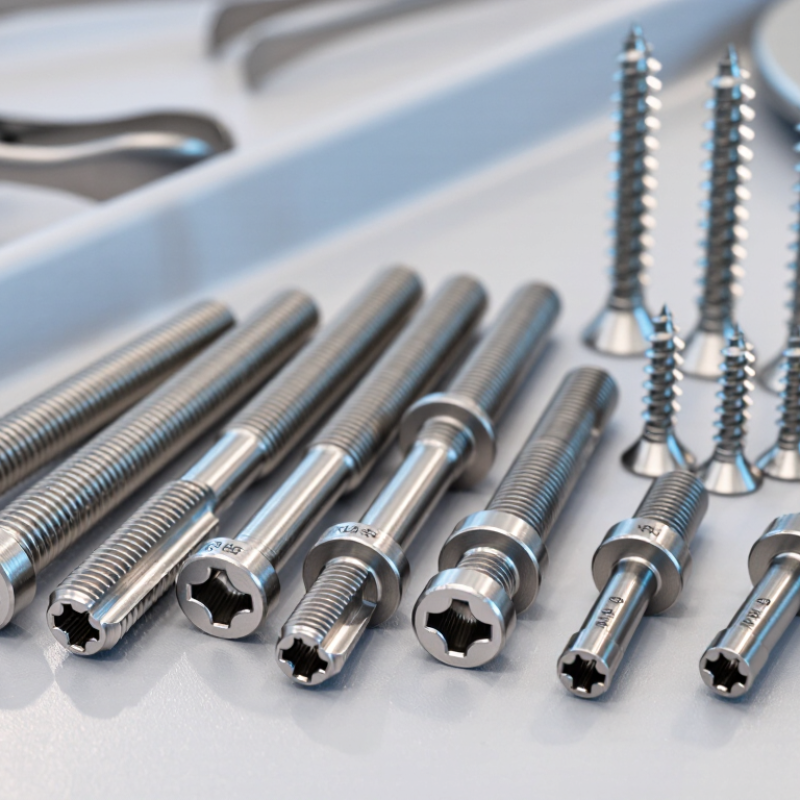
What Are the Best Bone Screws from China?

Types and Materials of Bone Screws Manufactured in China

What Are the Best Bone Screws from China?

The best bone screw depends on the surgical site, bone quality, and fixation method. Common types include cortical, cancellous, locking, compression, and cannulated screws. Cortical screws have fine threads for dense bone. Cancellous screws use deeper threads for softer bone. Locking screws connect with a plate and improve construct stability. Cannulated designs guide placement over a temporary wire.

Titanium alloy is widely selected because it offers strength, corrosion resistance, and useful biocompatibility. It also creates fewer imaging artifacts than some steel options. Stainless steel remains practical where high strength and cost control matter. Bioabsorbable polymers are available for selected applications, but their degradation behavior requires careful review. Material choice should match the implant’s intended use, not just its appearance.

In manufacturing audits, inspect thread profiles, head dimensions, surface finish, and lot traceability. Fatigue testing and corrosion testing provide stronger evidence than polished samples. ISO 13485-based quality systems are helpful, but certification alone does not prove every screw is reliable. Ask for material certificates, inspection records, sterilization information, and biocompatibility data. A supplier should explain tolerances clearly. Vague answers deserve caution. I have found that a low price can hide inconsistent machining or weak documentation. Even experienced buyers can overlook packaging damage or mixed lots. That mistake is avoidable.

What Are the Best Bone Screws from China? Types and Materials of Bone Screws

This chart compares representative tensile-strength values for materials commonly used in bone screws. Titanium alloys provide a strong strength-to-weight ratio, stainless steel offers cost-effective mechanical strength, PEEK is radiolucent and lightweight, and magnesium alloys are used in selected biodegradable screw designs.

Common screw types: cortical screws, cancellous screws, locking screws, cannulated screws, and compression screws. The most suitable material and design depend on bone quality, fixation requirements, imaging needs, and the intended clinical application.

Key Standards for Evaluating Chinese Bone Screw Quality

The best Chinese bone screw is not selected by country of origin. It is selected through measurable controls. A 2024 industry report valued the global orthopedic devices market at over USD 44 billion, increasing pressure on suppliers to scale quickly. That growth can widen quality differences. Request ISO 13485:2016 certification, but verify its scope, audit date, and manufacturing site. A certificate alone is not enough.

Mechanical evidence should follow ASTM F543-17(2023). Ask for insertion torque, removal torque, pullout strength, and fatigue results for the exact screw design. Review samples with a surgeon or experienced engineer. Threads should look clean under magnification, with no burrs around the cutting flute. Check dimensional records for diameter, pitch, head geometry, and drive fit. Small errors matter during surgery. They can damage the driver or weaken fixation.

Material records should identify the alloy, heat treatment, and surface condition. ISO 5832 requirements may apply to metallic implant materials, while ISO 10993 testing supports biological safety assessment. Confirm corrosion testing, cleaning validation, packaging integrity, and sterilization compatibility. China’s NMPA annual reports show a large and expanding domestic medical-device sector, but registration volume does not prove reliable production. Traceability is more useful: batch numbers, raw-material certificates, inspection results, and complaint records should connect clearly. I would also inspect an actual production batch, not only polished samples. That step is easy to skip. It should not be.

What Are the Best Bone Screws from China? - Key Standards for Evaluating Chinese Bone Screw Quality

Evaluation Dimension Objective Quality Benchmark Relevant Standard or Regulation Evidence to Request Key Acceptance Considerations
Material Identity The material grade must match the approved product specification and intended clinical application. ASTM F136 for titanium alloy; ASTM F138 for wrought 316L stainless steel; ISO 14630 for general requirements for non-active surgical implants. Material certificate, heat or lot number, chemical composition report, and independent material verification where required. No material substitution without documented design review, risk assessment, and customer approval.
Dimensional Accuracy Critical dimensions, thread geometry, head profile, drive interface, and length must conform to the approved engineering drawing. ASTM F543; applicable product drawing and validated inspection plan. First-article inspection report, calibrated measurement records, thread gauges, optical inspection, and sampling plan. There is no universal tolerance for every bone screw; acceptance limits must be defined for each screw design and size.
Thread and Drive Performance The screw should achieve reliable insertion, resist drive-interface damage, and maintain thread integrity under the intended use conditions. ASTM F543 mechanical test methods. Insertion torque, torsional strength, drive-interface performance, and thread-form inspection results. Test methods, fixtures, substrate, loading rate, and pass/fail limits must be documented and relevant to the intended indication.
Pullout and Structural Strength Mechanical performance must be sufficient for the specified anatomical site, screw design, bone condition, and fixation system. ASTM F543; validated product-specific mechanical specifications. Pullout strength, bending strength, fatigue or cyclic testing where applicable, and comparison with the approved design baseline. A single universal strength value is not appropriate because performance depends on diameter, length, thread design, material, and test setup.
Surface Finish and Cleanliness Surfaces should be free from burrs, cracks, visible contamination, embedded particles, corrosion, and defects that could affect use or biocompatibility. ISO 14630; validated cleaning and surface-treatment specifications. Visual inspection records, surface-treatment controls, cleaning validation, particulate or residue testing where applicable. Surface roughness limits should be specified by product design or clinical application rather than assumed to be identical for all screws.
Corrosion Resistance The selected alloy, manufacturing process, passivation, and surface treatment should provide corrosion resistance appropriate for long-term implantation. ASTM F138 or ASTM F136, as applicable; validated corrosion or passivation requirements. Passivation or anodizing records, corrosion test results where required, and traceability of treatment batches. Mixed-metal systems require an additional assessment of galvanic compatibility and clinical risk.
Biocompatibility The finished device, including residual process chemicals and surface treatments, must have an acceptable biological safety profile for its intended contact. ISO 10993 series; biological evaluation based on intended use and contact duration. Biological evaluation plan and report, cytotoxicity and sensitization data where applicable, and chemical characterization of the finished device. Testing should be performed or justified for the final finished configuration, not only for raw material.
Manufacturing Quality System The manufacturer should operate a controlled medical-device quality system covering design, production, purchasing, validation, nonconformities, and corrective actions. ISO 13485; applicable regulatory requirements in the destination market. Current quality-system certificate, scope of certification, audit history, process validation records, and corrective-action records. Verify that the certificate scope covers the specific type of implant and manufacturing activities being supplied.
Risk Management and Design Control Design risks, foreseeable misuse, material hazards, breakage, migration, loosening, and incompatibility with instruments should be evaluated and controlled. ISO 14971; ISO 13485 design-control requirements. Risk-management file, design verification and validation reports, usability or instrument compatibility assessment, and change-control records. Product changes should be formally assessed for effects on safety, performance, regulatory status, and interchangeability.
Sterilization and Packaging Sterile products must have a validated sterilization process and packaging system capable of maintaining sterility through the stated shelf life. ISO 11135 for ethylene oxide sterilization; ISO 11137 for radiation sterilization; ISO 11607 for packaging; ISO 10993-7 for ethylene oxide residuals where applicable. Sterilization validation, routine-cycle records, packaging validation, seal-strength or integrity testing, and shelf-life data. Non-sterile products should be clearly labeled with validated cleaning, sterilization, and handling instructions.
Traceability and Batch Release Every production lot should be traceable from raw material and processing history through final inspection, packaging, and shipment. ISO 13485 traceability and product-release requirements; applicable destination-market rules. Device history record, lot-release certificate, inspection results, nonconformance history, and recall or complaint procedure. Lot numbers should connect the finished screws to material heats, critical processes, inspectors, and release decisions.
Regulatory Documentation The product should have authorization or conformity documentation appropriate to the market where it will be sold and used. Applicable requirements of the National Medical Products Administration for products marketed in China; applicable rules in the importing market. Registration or listing information where required, declaration of conformity, technical documentation, labeling samples, and post-market surveillance procedures. Regulatory status must match the exact model, material, size range, sterile status, and intended use being purchased.
Supplier Qualification A qualified supplier should demonstrate consistent production capability, transparent documentation, controlled subcontracting, and effective complaint handling. ISO 13485 supplier-control principles; ISO 14971 risk-based supplier assessment. On-site or remote audit results, process-capability data, approved-supplier records, service history, and sample inspection results. The best-performing option is the one that combines documented compliance, repeatable test results, traceability, and reliable change control.

Note: Acceptance limits for dimensions, mechanical strength, surface characteristics, and packaging should be established in the approved product specification and validated for the intended clinical application.

How to Compare Chinese Bone Screw Manufacturers and Suppliers

Choosing the best bone screws from China requires comparing manufacturers, not just catalog prices.

A 2024 Fortune Business Insights report estimates the global orthopedic implants market will exceed USD 80 billion by 2032. That growth attracts capable factories and inexperienced traders. Separate them carefully.

Check whether the supplier owns production equipment or outsources machining. Request ISO 13485 certification, recent audit records, and lot-level traceability. Review material certificates for titanium alloy or implant-grade stainless steel. ASTM F136, ASTM F138, and ASTM F543 references can support material and mechanical evaluation. Ask for torque, pull-out, fatigue, dimensional, and corrosion test results. The supplier should identify test methods and laboratory accreditation clearly. Documentation matters.

Compare samples under magnification. Look at thread sharpness, cannulation, head recesses, surface marks, and package seals. A 2023 medical-device industry report found that quality systems and regulatory compliance remain major purchasing factors, not secondary paperwork. Request sterilization validation, biocompatibility evidence, shelf-life data, and complaint-handling procedures. Check whether the legal manufacturer matches the factory address. Samples can mislead. Production consistency matters more. Chinese suppliers may offer excellent machining and fast customization, but a low quotation can hide weak inspection controls. I would also compare three production lots, not one, before approval. That extra step costs time, yet it may reveal variation in thread dimensions or coating thickness. Market reports differ in their forecasts, so treat growth figures as context, not proof of supplier quality.

Clinical and Surgical Factors in Choosing Bone Screws

What Are the Best Bone Screws from China?

Choosing bone screws requires more than comparing prices or catalog photographs. The correct option depends on bone quality, fracture pattern, load direction, surgical approach, and the patient’s healing risks. The AAOS 2023 guideline on hip fractures in older adults stresses individualized implant selection and surgeon judgment. That principle also applies to screws manufactured in China. Titanium alloy may support biocompatibility and lower imaging interference, while stainless steel can offer familiar handling and strong mechanical performance. However, material choice alone does not guarantee success.

Look closely at thread geometry, core diameter, pitch, head design, and driver engagement. In osteoporotic bone, deeper threads may improve purchase, but aggressive geometry can complicate removal. Poor fit can damage the screw recess during surgery. The FDA’s orthopedic device guidance emphasizes validated mechanical testing, manufacturing controls, labeling, and traceability. Check fatigue strength, torsional performance, sterilization records, lot identification, and clinical evidence. ISO 13485 certification supports quality management, but it is not a substitute for procedure-specific evidence. That distinction is often missed.

Tips:

Match the screw to the fixation plan, not the sales description. Confirm imaging compatibility and instrument accuracy before surgery. Review independent test reports where possible. Ask whether published data reflect similar bone density and fracture types. A lower unit price may become expensive after instrumentation problems, delays, or revision surgery. No screw is universally best. Even experienced teams can overestimate laboratory strength and underestimate patient biology.

Ordering, Sterilization, and Regulatory Considerations for China-Made Screws

What Are the Best Bone Screws from China?

Choosing the best bone screws depends on clinical purpose, material, geometry, and evidence. A low quoted price is not enough. Request drawings, material specifications, dimensional tolerances, and fatigue-testing data before ordering. Confirm the screw matches the intended plate system and surgical technique. Ask for production samples from the same process used for commercial lots.

Sterilization requires documented control, not a logo on a package. Determine whether the screws are supplied sterile or non-sterile. For sterile products, review the validated method, such as ethylene oxide or radiation, and check packaging integrity. Ask for sterilization records, residual-limit results, expiration dating, and transport conditions. Inspect cartons for crushed corners, broken seals, or moisture stains. Small packaging damage can matter.

Regulatory requirements depend on the destination market and device classification. Verify the manufacturer’s quality system, registration status, technical documentation, labeling, traceability, and complaint procedures. The importer may need local authorization and post-market reporting controls. Confirm lot numbers can be linked to raw materials, inspection records, and sterilization batches. A certificate alone does not prove consistent quality. I have seen document packages look complete while leaving key test methods unclear. That gap deserves written clarification before payment. Independent inspection can reveal surface scratches, thread defects, or incorrect dimensions. Keep acceptance criteria measurable, approved, and linked to the purchase order.

FAQS

How should the right bone screw be selected?

Selection depends on the surgical site, bone quality, and fixation method. There is no universal best screw.

What is the difference between cortical and cancellous screws?

Cortical screws have fine threads for dense bone. Cancellous screws have deeper threads for softer bone.

When can locking or cannulated screws be useful?

Locking screws connect with a plate and may improve construct stability. Cannulated screws guide placement over a temporary wire.

Which materials are commonly used for bone screws?

Titanium alloy offers strength, corrosion resistance, and useful biocompatibility. Stainless steel supports high strength and cost control.

Are bioabsorbable polymer screws suitable for every procedure?

No. Their degradation behavior requires careful review. Material choice should match the intended use, not appearance.

What quality details should a buyer inspect?

Inspect thread profiles, head dimensions, surface finish, and lot traceability. Look for burrs under magnification.

Which test results provide meaningful mechanical evidence?

Request insertion torque, removal torque, pullout strength, and fatigue results for the exact screw design.

Is an ISO 13485 certificate enough to prove quality?

No. Check its scope, audit date, and manufacturing site. Also request inspection records, material certificates, and complaint records.

How can material and biological safety be reviewed?

Confirm the alloy, heat treatment, surface condition, corrosion testing, and biocompatibility data. Packaging and sterilization compatibility also matter.

What purchasing mistakes should be avoided?

Do not inspect only polished samples. Review an actual production batch, because mixed lots or damaged packaging can be overlooked.

Conclusion

Choosing the best Bone Screws from China requires a careful review of product design, materials, manufacturing quality, and clinical suitability. Chinese manufacturers may produce various screw types, including cortical, cancellous, locking, and cannulated screws, commonly made from medical-grade stainless steel or titanium alloys. Buyers should evaluate dimensional accuracy, mechanical strength, surface finish, biocompatibility, traceability, and consistency with recognized medical-device quality standards. Comparing suppliers should also include their production capabilities, inspection procedures, documentation, customization options, communication, and ability to provide reliable samples and technical support.

Clinical application remains the most important factor when selecting Bone Screws. Surgeons and purchasing teams should consider anatomy, bone density, fixation method, screw geometry, and compatibility with related instruments or implants. Before ordering, buyers should confirm packaging, sterilization status, shelf life, labeling, and transport conditions, as well as the regulatory requirements applicable in the destination market. A well-qualified supplier should provide clear technical files and support safe, consistent procurement.

Liam

Liam

Liam is a dedicated marketing professional with a profound expertise in the industry, where he excels at highlighting the unique advantages of our core products. With a keen understanding of market trends and consumer needs, Liam frequently updates our company’s professional blog, providing......